

If you are learning Forex from TikTok, Instagram, or Twitter, you are setting yourself up for failure.
Those platforms are built for entertainment, not education. They show flashy cars, quick wins, and fake lifestyles, but never explain how forex market really works behind the scenes.
Today, I am breaking that illusion. You are about to see the real structure of the market.
The key pillars, the true movers, and the hidden mechanics that quietly stop traders out even when their setups look perfect.
Read this carefully, take notes. Because without understanding how forex really works, every trade is a gamble.
Who Really Moves The Forex Market
Let us start by killing one illusion immediately.
Retail traders do not move the Forex market.
Your buy button.
Your sell button.
Your lot size.
None of it moves the price.
So who does?
The Market Hierarchy Explained Simply
The Forex market works like a food chain.
At the very top are the
1. Banks: These are the interbank giants
- JP Morgan
- Goldman Sachs
- HSBC
- Bank of America
- UBS
These institutions move trillions daily. When people say Forex is a multi-trillion-dollar market, this is where that volume comes from.
These banks provide liquidity. They facilitate global currency exchange. They are the biggest movers of price.
Below the banks are hedge funds.
2. Hedge funds: Hedge funds manage large pools of capital for investors. Firms like BlackRock or Berkshire Hathaway operate here.
They do not need crazy returns. Their job is to manage risk, hedge exposure, and grow capital steadily using massive size.
Below the hedge funds are institutions.
3. Institution: This includes proprietary trading firms, asset managers, and professional money managers who trade significant capital. These players can influence price in certain conditions, but still follow the flow created by the banks.
At the bottom are retail traders.
4. Retail Traders: That is you. Retail traders participate in the market. They do not control it.
The Wave Analogy You Must Understand
Think of the market like the ocean.
Banks create the waves.
Hedge funds and institutions amplify and ride those waves.
Retail traders either learn to surf them or get crushed by them.
Most beginners try to create waves. That is why they drown.
Your job is not to fight the market. Your job is to align with it.
Once you accept who moves the Forex market, you stop blaming brokers, stop blaming manipulation myths, and start focusing on reading the market correctly.
Forex Liquidity: The Real Reason You Keep Getting Stopped Out
If there is one concept that transforms a trader’s understanding, it is liquidity.
What Forex Liquidity Really Means
Liquidity in Forex simply means how much money is available to be traded at any given price level and how easily large orders can be executed without causing erratic price movement.
- Every order represents liquidity
- Market orders are liquidity
- Pending orders are liquidity
- Stop losses are liquidity waiting to be triggered
Anywhere money is pooled, the market pays attention.
Price naturally moves toward areas where enough orders exist to absorb large institutional trades smoothly.
This is not manipulation or evil intent.
It is simply how an efficient market functions.
Stop Loss Clusters Explained
A stop loss cluster is an area on the chart where many traders place their stop losses at the same price level.
Because most retail traders are taught to buy at support, sell at resistance, and trade breakouts, their stop losses end up in predictable locations below support, above resistance, or under trendlines.
When these stops stack together, they form a pool of liquidity.
The market does not avoid these areas. It is drawn to them because that is where a large number of orders can be triggered and filled efficiently.
Market Manipulation Without The Drama
Market manipulation in Forex is often misunderstood.
It does not mean the market is rigged against you.
It simply means price moves intentionally toward areas where large amounts of orders are waiting, so big players can execute trades efficiently.
Institutions cannot enter large positions without enough opposing orders.
Those opposing orders usually sit where retail traders place their stop losses.
So price dips below obvious support, triggers stops, creates liquidity, fills institutional orders, and then reverses.
Retail traders call it a fake breakout.
Professionals understand it as normal market mechanics.
Why Fake Breakouts Keep Destroying You
Fake breakouts are not accidents.
They are price reaching into liquidity zones before moving in their true direction.
Once you understand Forex liquidity, you stop chasing breakouts and start waiting for manipulation to complete.
This alone changes everything.
Forex Trading Sessions And Why Time Actually Matters
Price does not move the same way all day.
Forex trading sessions exist because different financial centers control volume at different times.
London Session Volatility
London is the heartbeat of Forex.
- This is where volatility expands
- This is where major moves often begin
- This is where banks step in aggressively
When London opens, Price wakes up.
New York Session Continuation Or Reversal
New York has two jobs.
Either it continues what London started, or it reverses it completely.
This is why traders get caught if they do not understand session behavior.
You see a strong London move.
You assume continuation.
New York says otherwise.
Both outcomes are logical when you understand institutional behavior.
Asian Session Ranges
Asia is typically slow.
Price ranges.
Liquidity builds.
Traps form.
This session is where many beginners lose money because they expect movement that simply is not there.
Why Beginners Lose At The Wrong Time
Trading at the wrong session is like fishing in an empty river.
Understanding Forex trading sessions allows you to align timing with intention.
Market Cycles Impulse And Consolidation
The Forex market does not move randomly; it follows a rhythm.
Understanding this rhythm is one of the first mindset shifts every beginner must make.
Impulse Moves Explained
An impulse move is a strong and clear price movement in one direction. This is when the market is trending and expanding.
Price moves fast, candles are large, and direction feels obvious.
This phase happens when institutions are actively entering positions.
Beginners love this phase because trades move quickly in their favor, and confidence rises.
Consolidation Phases Explained
After a strong move, the market needs to pause.
This pause is called consolidation.
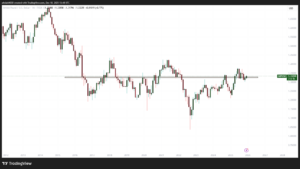
Consolidation is when the price moves sideways, creating a range. The market is balancing. Orders are being filled.
Liquidity is building for the next move.
Beginners often lose money here because they keep trading as if the trend is still strong. They force trades instead of waiting.
Why Trends Do Not Last Forever
No trend continues endlessly; once enough orders are filled and liquidity dries up, the price must slow down and rebalance.
If you trade a consolidation phase like a trending market, small losses add up quietly.
Understanding market cycles helps you adjust your expectations instead of chasing movement that is no longer there.
Brokers: What They Do And What They Do Not Do
Let us clear another dangerous myth.
Your broker is not hunting you.
The Role Of Forex Brokers
A Forex broker is an intermediary; their job is to connect you to the market by routing your trades to liquidity providers and ensuring your orders are executed.
They do not decide where the price goes. They do not control the market.
What Spreads Really Are
The spread is the small difference between the buy price and the sell price; this difference is how brokers earn money for providing access and execution.
It is not a trick or a scam; it is simply the cost of doing business in the market.
Buy, Sell, and Execution Basics
Every trade needs two sides. When you buy, someone else sells.
When you close a trade, the opposite order is executed.
Once you understand this, fear of brokers disappears, and focus returns to what truly matters: your analysis and decision-making.
Why Top Down Analysis Forex Changes Everything
This is where everything begins to connect for a beginner.
Top-down analysis of Forex is not a strategy; it is a way of reading the market from the bigger picture down to the smaller details.
Instead of jumping straight into entries, you first understand context.
With top-down analysis, you identify
- The overall market direction on higher time frames
- Where liquidity is likely resting
- Which session are you trading in
- Where high probability areas exist
This approach helps you stop reacting emotionally to every candle; you begin to anticipate what price is likely to do next.
You wait for the price to come to you instead of chasing it.
This is how professionals approach the Forex market.
Conclusion: How Forex Really Works And The Mindset Shift You Need
Forex is not chaos.
It is not random.
It is structured.
When you understand how Forex really works, you stop gambling.
You stop blaming.
You stop rushing.
You start thinking like a professional.
You start respecting the process.
You start aligning with the market instead of fighting it.
Do not place another trade until this foundation is clear in your mind.
Because understanding is what separates the 95 percent from the few who survive.
And now you are no longer guessing.
You are finally seeing the market for what it truly is.